Make unclear problems usable
I turn fast-moving, regulated, or emotionally complex domains into clear product choices.
 Lana Schuler's Life Aria
Product leadership, responsible AI, theatre, haiku
I lead product work at Google, with a focus on responsible AI and privacy-first personalization. I also serve on the TheatreWorks board and build Lifaria, a beta app for turning photos, notes, files, and voice into a private Life Book.

I work on responsible AI, privacy-first personalization, governance, and user trust.
In my private Life Book beta, I keep sources visible and approval close to the person.
I serve on the TheatreWorks board and keep a weekly bilingual haiku practice.
Home
I use this site to collect the pieces of my work that belong together but do not fit neatly on a resume: product leadership, responsible AI, a Life Book beta called Lifaria, TheatreWorks board service, and a year of weekly haiku.
Across these areas, I keep returning to a practical question: how do we build systems that help people make meaning without taking ownership away from them?
I turn fast-moving, regulated, or emotionally complex domains into clear product choices.
I treat governance, consent, signal use, and memory as part of the architecture from the beginning.
I want AI to help organize memory without replacing the person's judgment.
Bio
I am a product leader at Google working on responsible AI and privacy-first personalization. My work sits at the intersection of product strategy, governance, user trust, and systems that handle personal context with care.
I have spent more than two decades building consumer and platform products across communications, mobility, e-commerce, AdTech, and privacy-sensitive technology. I turn ambiguous spaces into clear product architecture and help teams make durable decisions under real constraints.
Outside my Google work, I am building Lifaria, a private Life Book beta, serving on the TheatreWorks Silicon Valley Board of Trustees, and keeping a weekly bilingual haiku practice in English and Russian.
I work in Product Leadership at Google, with a focus on responsible AI and privacy-first personalization. My work asks a practical question: when products remember, infer, recommend, or adapt, how do we make those behaviors useful, governed, and legible to the person using them?
Over more than two decades, I have led product work across consumer technology, communications, mobility, e-commerce, AdTech, and platform systems. I have worked in startups, growth-stage companies, and enterprise environments, which has taught me how to move from ambiguity to product architecture, from strong opinion to testable strategy, and from isolated feature work to systems that can be operated responsibly.
Much of my current attention is on the boundaries around AI: what context a system should use, what it should forget, when it should ask permission, how it should explain itself, and where human judgment must stay in the loop. I care about building products that can earn trust over time, not just demonstrate intelligence in a moment.
Lifaria is my personal beta project around those ideas. It turns selected photos, notes, documents, and voice into a private Life Book, with sources, edits, and approval visible at each step. It is a product experiment, and also a way of thinking about memory, authorship, and the right role of AI in intimate material.
Outside product work, I serve on the TheatreWorks Silicon Valley Board of Trustees and write weekly bilingual haiku in English and Russian. Theatre keeps me close to timing, attention, and human presence; poetry keeps me honest about compression, image, and meaning.
Experience
My career started in software engineering and grew through analytics, advertising platforms, identity, mobility, and AI. The throughline is product work in complex systems where user value, governance, business performance, and trust all have to hold together.
I have moved between hands-on technical delivery, product strategy, executive leadership, and board service. That range lets me work close to the architecture while still seeing the broader operating model around it.
Privacy-first personalization, memory, context, governance, and safe use of user signals.
AdTech, identity, mobility operations, content systems, and developer-facing product surfaces.
Software engineering, analytics, product leadership, research organizations, and nonprofit board service.
I set strategy for privacy-first AI personalization across Chrome and partner teams, with work spanning AI Research, Chrome, Android, Google DeepMind, Android Privacy, privacy-first advertising, Search/Tenor, and Assistant.
I support the organization's mission, sustainability, and community impact, bringing a product and technology lens to strategy, audience engagement, responsible growth, and operational resilience.
I led product as Ridecell expanded from shared mobility software into a broader mobility operations platform for fleet automation, rentals, subscriptions, micromobility, risk management, and vehicle usership.
I led product strategy as Business Wire evolved from press release distribution toward a multi-sided communications platform for PR practitioners, media audiences, influencers, and partners.
I led product strategy for mobile advertising, identity, measurement, targeting, and cross-device graph products, with strong operating discipline around privacy, data quality, partner governance, and commercialization.
I moved from engineering leadership into business intelligence and then product leadership, working across merchant systems, publisher networks, advertising products, auctions, bidding, reporting, campaign management, and partner APIs.
I built enterprise software and deepened the technical foundation that later shaped my work across platforms, data, privacy, and developer-facing systems.
I developed enterprise software in a customer communications and CRM technology environment.
I began in ecommerce engineering, building the product systems and execution habits that later informed my marketplace and platform product work.
Lifaria beta
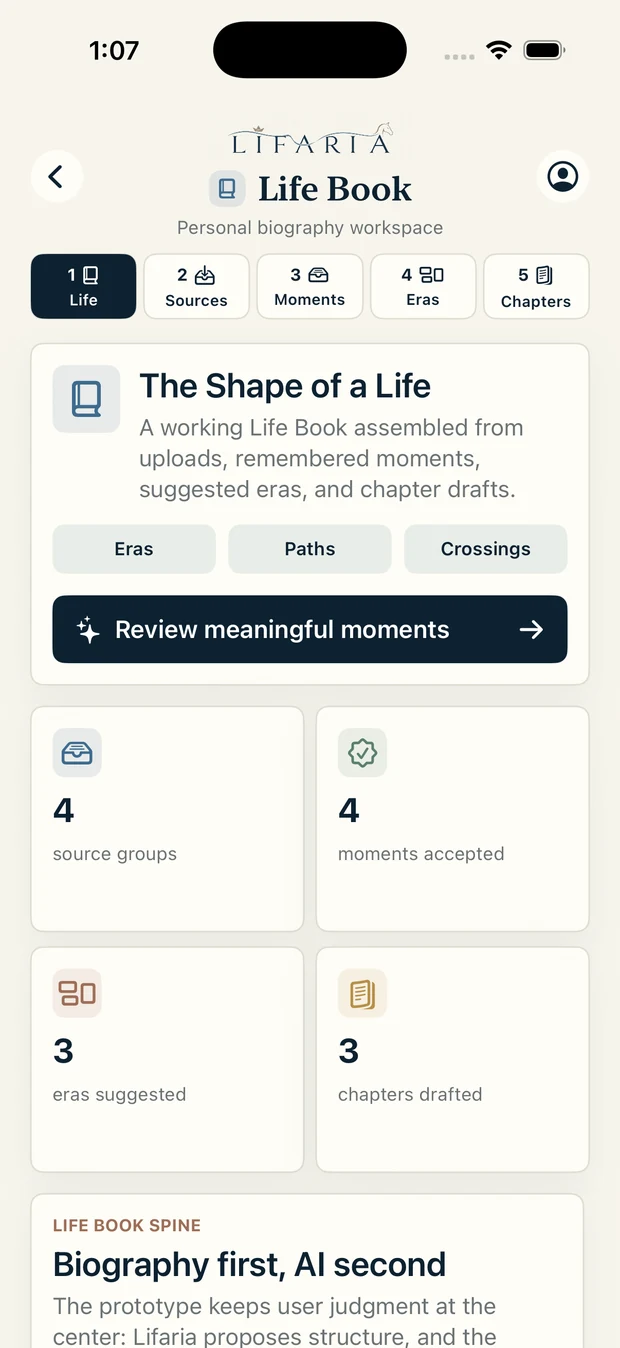
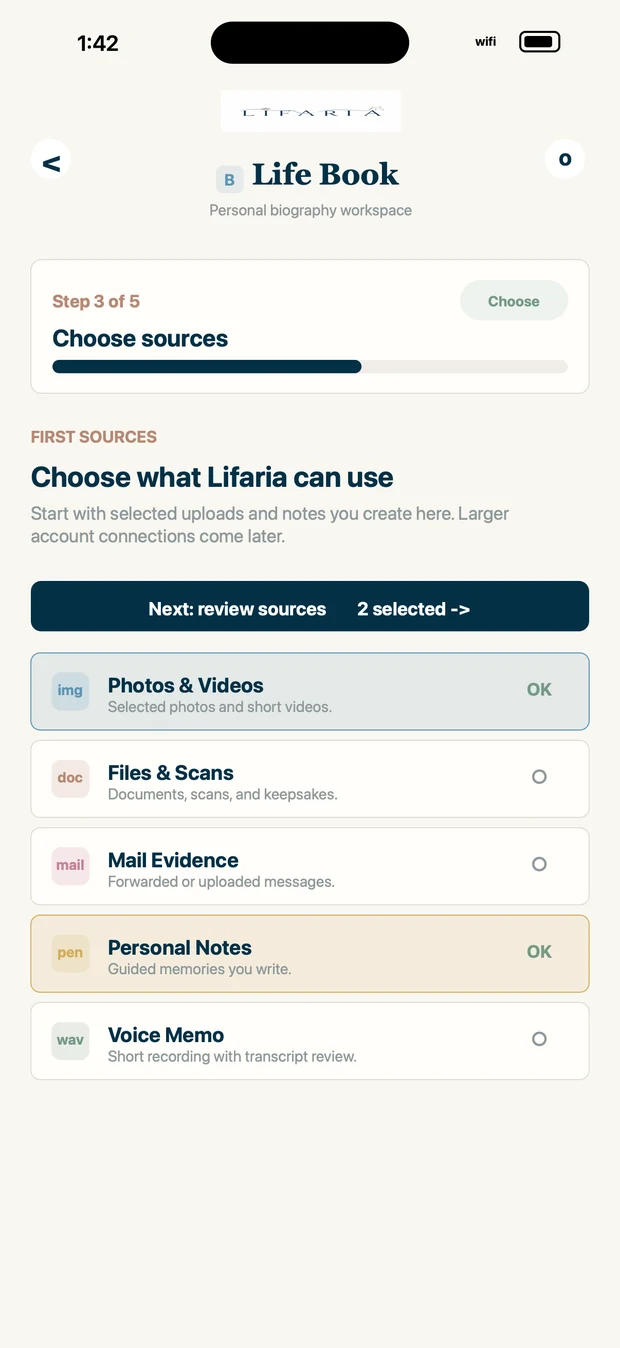
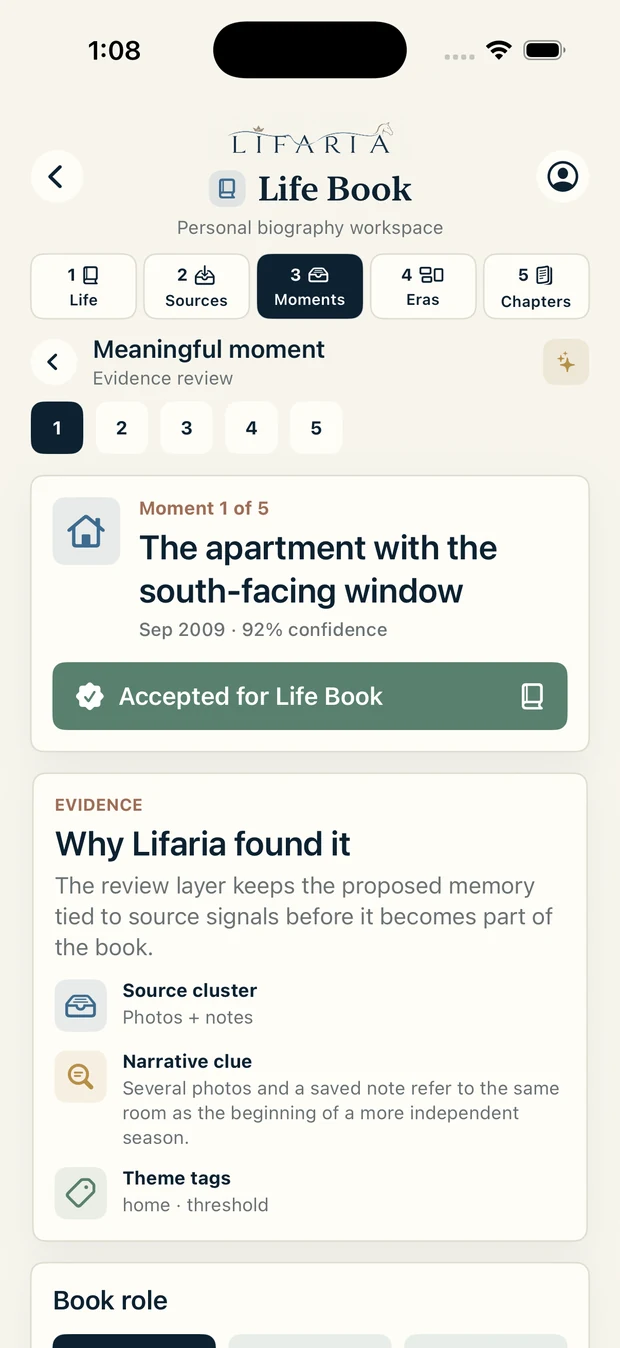
I am building Lifaria to turn selected photos, notes, files, and voice into meaningful moments, eras, and chapters. I want AI to serve the person whose life is being shaped, not claim the story for itself.
I keep moments and chapters connected to the photos, files, notes, or memories that support them.
I am designing Lifaria around review, acceptance, editing, and ownership rather than automatic biography.
I am taking the product toward consent, inspection, and personal control over extraction or spectacle.
I shape sources into moments, moments into suggested eras, and eras into a Life Book with a coherent spine.
TheatreWorks / practice
I serve on the TheatreWorks Silicon Valley Board of Trustees, supporting the organization’s mission, long-term sustainability, and community role. The work brings my product and technology judgment into a cultural setting where the measure is not only efficiency, but resonance.
Theatre sharpens the same instincts required in product leadership: pacing, stakes, audience trust, emotional truth, and the courage to revise until the room changes.
Strategy, sustainability, community relevance, and support for new work.
How a room grants attention, when it withdraws it, and what earns it back.
I pay attention to the best line, strongest scene, design choice, emotional residue, and structure under pressure.
I use haiku, theatre, forest walks, and story-gathering as ways to keep perception precise.
Weekly haiku
I write these haiku as a weekly practice of noticing: nature, luck, fatigue, synchronicity, ritual, and the ordinary details that become visible when I keep language small.
June 26th - 52ndFortune finds the door!
Luck pours in and stays for good.
River finds the sea!
Blog
Why I think personalization systems need explicit choices about what they remember, forget, infer, and expose.
How I want a biography tool to keep sources, approvals, and edits close to every generated chapter.
I keep returning to iteration, timing, audience trust, and the difference between a correct answer and a living one.
How I use constraint to turn attention into a practice rather than a mood.
How I try to make progress when the system is changing, the stakes are real, and certainty would be premature.